The cost of higher education has been steadily increasing, making it challenging for students to afford. The rising cost of US College Tuition has become a significant concern for many families.

As the financial burden of pursuing higher education grows, it’s essential to understand the factors contributing to this trend. The increasing cost of higher education is not just a matter of rising tuition fees; it’s a complex issue influenced by various factors.
Key Takeaways US College Tuition
- The cost of higher education is rising sharply.
- Factors contributing to the increase include inflation and reduced state funding.
- Students are graduating with significant debt.
- The financial burden affects not just students but also their families.
- Understanding the causes can help in finding solutions.
The Staggering Reality of Modern College Costs
The reality of college costs today is staggering, with many institutions charging tuition rates that were unimaginable just a few decades ago. The rising costs are affecting students and families across the United States, making it essential to understand the current landscape of US College Tuition.
Current Average Tuition Rates Across Institution Types
Average tuition rates vary significantly across different types of institutions. Public universities, private colleges, and community colleges each have distinct tuition structures. According to recent data, the average annual tuition for public four-year colleges is around $10,000, while private non-profit colleges can exceed $50,000. Community colleges, on the other hand, offer more affordable options, with average tuition rates around $4,000 per year. The disparity in tuition rates highlights the need for students and families to carefully consider their college choices.
The $100,000+ Degree Phenomenon
The phenomenon of degrees costing over $100,000 is becoming increasingly common, particularly at elite private colleges. Some institutions are now charging tuition rates that push the total cost of a degree beyond the $100,000 mark, not including additional expenses such as room and board. This trend is alarming, as it places a significant financial burden on students and their families.
“The total cost of attending college is now a major concern for many families, with some institutions pushing the total cost beyond $100,000.”
Higher Education Expert
Hidden Costs Beyond Tuition
Beyond tuition, there are numerous other expenses associated with attending college. These include room and board, textbooks, transportation, and personal expenses. These hidden costs can add up quickly, significantly increasing the overall cost of attending US College Tuition. For instance, room and board can range from $8,000 to $12,000 per year, while textbooks and supplies can cost an additional $1,000 to $2,000 annually. Understanding these additional expenses is crucial for students and families planning for college.
Historical Perspective: How College Became Unaffordable
The rising cost of US College Tuition is not a new phenomenon, but its acceleration in recent years is unprecedented. To understand how college costs have escalated to their current levels, it’s essential to examine the historical context.
College Costs in the 1970s-1990s
In the 1970s and 1980s, US College Tuition began to rise, but at a slower pace than today. According to historical data, the average tuition and fees for the 1970-71 academic year were approximately $1,724 at public four-year institutions and $4,515 at private non-profit four-year colleges. By the 1990-91 academic year, these figures had increased to about $2,159 and $13,421, respectively.
The Acceleration of Tuition Increases Since 2000
The 21st century has seen a significant acceleration in tuition increases. From 2000-01 to 2020-21, the average tuition and fees at public four-year institutions rose from $3,508 to $10,440, while private non-profit four-year US College Tuition saw an increase from $19,300 to $41,440. This represents a substantial rise in costs, outpacing inflation and wage growth.
Inflation vs. Tuition Growth: The Widening Gap
When comparing tuition growth to inflation, the disparity becomes stark. While the Consumer Price Index (CPI) measures inflation, tuition costs have consistently outpaced it. For instance, between 1980 and 2020, the CPI increased by about 250%, whereas US College Tuition rose by over 1,000%. This widening gap highlights the unique challenges facing higher education affordability.
| Year | Public Four-Year Tuition | Private Non-Profit Four-Year Tuition | CPI Increase |
|---|---|---|---|
| 1970-71 | $1,724 | $4,515 | 3.3% |
| 1990-91 | $2,159 | $13,421 | 5.4% |
| 2020-21 | $10,440 | $41,440 | 1.2% |
https://www.youtube.com/watch?v=5kFzr5x8Zjg
US College Tuition 2025: Why Degrees Now Cost $100,000+
Projections indicate that US college tuition will continue its upward trend through 2025. As a result, understanding the future costs of higher education is crucial for families and students planning for college.
Projected Costs for Public Universities
Public universities are expected to see a significant increase in tuition fees. According to recent forecasts, the average annual cost for in-state students at public four-year US College Tuition could rise to around $25,000 by 2025. This represents a substantial increase from current rates, further widening the gap between the cost of higher education and the average family’s ability to pay.
| Year | Average In-State Tuition | Average Out-of-State Tuition |
|---|---|---|
| 2023 | $10,440 | $22,800 |
| 2024 | $11,500 | $24,500 |
| 2025 | $12,800 | $26,300 |
Private US College Tuition Forecasts
Private US College Tuition are also expected to increase their tuition rates, potentially surpassing the $60,000 mark per year by 2025. This would put the total cost of a four-year degree at over $240,000, not including room, board, and other expenses. The rising costs are attributed to various factors, including increased operational expenses and investments in campus facilities.
The Compounding Effect of Annual Tuition Hikes
The annual increase in tuition rates has a compounding effect, much like compound interest on a loan. As tuition rates rise each year, the base cost for the next year becomes higher, leading to even higher costs in subsequent years. This compounding effect is a significant driver of the rapidly escalating total cost of obtaining a US College Tuition degree.
For instance, if tuition increases by 3% annually, the cost will double in about 24 years. However, with the current rates of increase often exceeding 3%, the doubling period is significantly shorter. This rapid escalation underscores the importance of planning and exploring financial aid options early.
Administrative Bloat: A Major Cost Driver
Administrative bloat has emerged as a major factor contributing to the increasing expense of college degrees in the United States. This phenomenon is characterized by the significant growth in administrative positions and expenditures within higher education institutions.
The Explosion of Non-Faculty Staff Positions
One of the primary indicators of administrative bloat is the rapid expansion of non-faculty staff positions. Over the past few decades, there has been a notable increase in the number of administrative personnel employed by US College Tuition and universities.
Growth in Student Services Departments
Student services departments have seen considerable growth, with many institutions now offering a wide range of services aimed at enhancing the student experience. These include counseling services, career advising, and extracurricular activity coordination.
Compliance and Regulatory Staff Expansion
The need to comply with an ever-increasing array of regulations has led to the expansion of compliance and regulatory staff. This includes positions focused on ensuring institutional compliance with federal and state laws, as well as managing risk.
Executive Compensation in Higher Education
Another significant aspect of administrative bloat is the rising cost of executive compensation in higher education. This includes the salaries and benefits of top administrators, such as college presidents and provosts.
Presidential Salaries and Benefits
The compensation packages for US College Tuition presidents have seen substantial increases over the years. This includes not only their base salaries but also additional benefits, such as housing allowances and performance bonuses.
Administrative Hierarchy Expansion
The administrative hierarchy within colleges and universities has also expanded, with the creation of new vice presidencies and other senior administrative positions. This expansion contributes to the overall cost of administration.
Key statistics highlighting administrative bloat include:
- A significant increase in administrative personnel over the past few decades.
- Rising costs associated with executive compensation.
- Expansion of student services and compliance departments.
As the cost of higher education continues to rise, understanding the role of administrative bloat is crucial. By examining the factors contributing to this trend, institutions can work towards creating more sustainable financial models.
Decreased Public Funding and Its Consequences
As public funding for US College Tuition dwindles, the financial burden on students and families intensifies. The reduction in public support has far-reaching implications for the higher education system.
State Budget Cuts to Higher Education
State budget cuts have significantly impacted higher education funding. Over the past two decades, many states have reduced their financial support to public colleges and universities. This trend is evident in the data:
| State | 2000 Funding per Student | 2020 Funding per Student | Change |
|---|---|---|---|
| California | $8,466 | $4,444 | -47.5% |
| Texas | $7,259 | $4,119 | -43.3% |
| New York | $9,823 | $6,444 | -34.4% |
Federal Policy Changes Affecting College Affordability
Federal policy changes have also played a crucial role in shaping college affordability. Shifts in financial aid policies and tax laws have influenced the overall cost of higher education. For instance, changes in the Pell Grant program have affected millions of students.
Shifting the Financial Burden to Students and Families
As public funding decreases, US College Tuition have shifted the financial burden to students and families through increased tuition and fees. This shift has led to a significant rise in student debt. According to recent data, the average student loan debt has surpassed $30,000.
The consequences of decreased public funding are multifaceted, affecting not only students but also the overall quality of higher education. As the financial burden grows, it’s essential to consider the long-term implications for the US education system.
The Amenities Arms Race on College Campuses
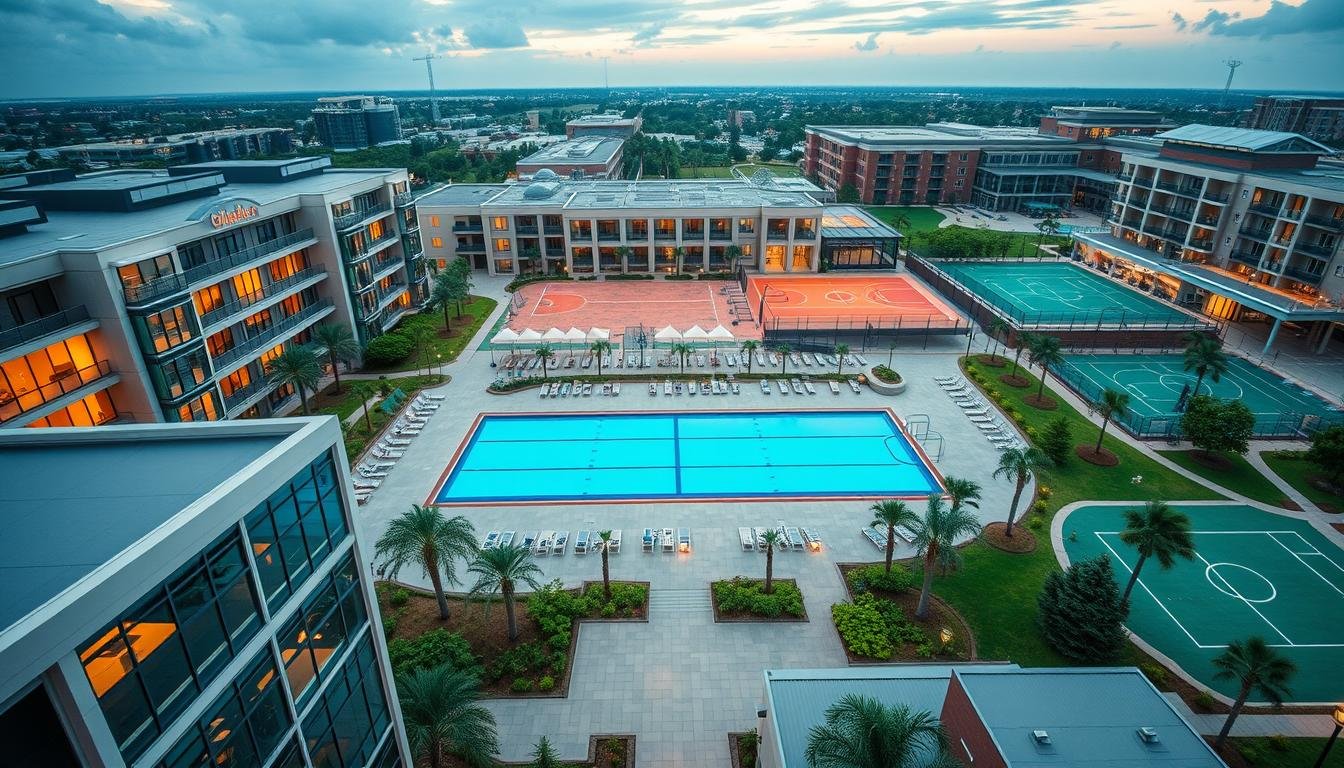
US College Tuition are engaging in an amenities arms race, offering students increasingly luxurious and high-tech environments that come with a hefty price tag. This trend is transforming the higher education landscape, as institutions compete to provide the most attractive facilities and services.
Luxury Dorms and Recreation Centers
One of the most visible manifestations of the amenities arms race is the proliferation of luxury dorms and recreation centers. These facilities often feature:
- High-end amenities like flat-screen TVs, granite countertops, and private bathrooms
- State-of-the-art fitness centers and recreational facilities, such as climbing walls and lazy rivers
- Enhanced security measures, including card-access entry systems and 24/7 surveillance
Such luxurious living arrangements are designed to attract top students and justify higher tuition rates.

High-Tech Classrooms and Facilities
Beyond living quarters, US College Tuition are also investing in high-tech classrooms and facilities to enhance the academic experience. These include:
- Interactive whiteboards and virtual reality learning tools
- Advanced laboratories equipped with cutting-edge technology
- Collaborative workspaces that foster innovation and teamwork
These upgrades not only improve the quality of education but also serve as a marketing tool to attract tech-savvy students.
Marketing-Driven Campus Improvements
Many of the campus improvements are driven by marketing considerations rather than purely educational needs. Colleges are:
- Creating visually stunning campuses to impress prospective students and their parents
- Investing in amenities that may not directly impact academic outcomes but enhance the overall college experience
- Using these facilities as selling points in their marketing campaigns to differentiate themselves from competitors
This approach contributes to the rising costs of higher education, as the expenses associated with these amenities are often passed on to students through higher tuition and fees.
The Student Loan Crisis and Its Economic Impact
With outstanding student debt now exceeding $1.7 trillion, the student loan crisis is not only a financial issue but also an economic one. The far-reaching implications of this crisis are affecting not just individuals but the broader economy as well.
$1.7 Trillion in Outstanding Student Debt
The scale of the student loan crisis is staggering. The total outstanding student debt in the United States has surpassed $1.7 trillion, with millions of borrowers affected. This figure represents a significant portion of the country’s economy and highlights the magnitude of the issue.
| Category | Total Debt | Average Debt per Borrower |
|---|---|---|
| Federal Student Loans | $1.4 trillion | $30,000 |
| Private Student Loans | $300 billion | $40,000 |
Long-Term Economic Consequences for Graduates
The impact of the student loan crisis extends beyond the immediate financial burden. It has long-term economic consequences for graduates, affecting major life decisions and career choices.
Delayed Homeownership and Family Formation
One of the significant effects of high student debt is the delay in homeownership and family formation. Many graduates put off buying a home or starting a family due to their financial obligations.
Impact on Career Choices and Entrepreneurship
Student debt also influences career choices, with many graduates opting for higher-paying jobs to manage their debt rather than pursuing lower-paying fields they are passionate about. This can stifle entrepreneurship and innovation.
Psychological Burden of Student Debt
Beyond the economic implications, the student loan crisis also has a psychological burden on individuals. The stress and anxiety caused by debt can affect mental health and overall well-being.
In conclusion, the student loan crisis is a complex issue with far-reaching economic and psychological impacts. Addressing this crisis requires a multifaceted approach that includes policy reforms, institutional changes, and individual financial planning.
Is College Still Worth It? Analyzing ROI
The rising costs of attending US College Tuition have sparked a critical examination of its return on investment. As tuition fees continue to climb, prospective students and their families are increasingly concerned about the financial viability of higher education.
To assess the value of a college degree, it’s essential to consider various factors, including lifetime earnings, field-specific ROI, and alternative education pathways. This analysis will provide a comprehensive understanding of whether the investment in higher education yields substantial returns.
Lifetime Earnings Premium for Degree Holders
Studies have consistently shown that individuals with a college degree tend to earn significantly more than those without one. According to the Bureau of Labor Statistics, workers with a bachelor’s degree typically earn about 50% more than those with only a high school diploma. This lifetime earnings premium is a crucial factor in determining the ROI of a US College Tuition education.
- Median weekly earnings for bachelor’s degree holders: $1,334
- Median weekly earnings for high school diploma holders: $746
Field-Specific Return on Investment
The ROI for US College Tuition degrees can vary significantly depending on the field of study. For instance, degrees in STEM fields (science, technology, engineering, and mathematics) generally offer higher returns compared to those in the humanities. Understanding these differences is vital for making informed decisions about one’s educational and career path.
- Engineering majors often see high starting salaries and strong job prospects.
- Humanities majors may face more limited job opportunities and lower starting salaries.
Alternative Education Pathways
As the traditional college route becomes increasingly expensive, alternative education pathways are gaining popularity. These include trade schools, vocational training, and online degrees or certifications.
Trade Schools and Vocational Training
Trade schools and vocational training programs offer specialized skills that are directly applicable to specific industries. These programs are often shorter and less expensive than traditional US College Tuition degrees, making them an attractive option for those looking to enter the workforce quickly – Degrees USA 2025
Online Degrees and Certifications
The rise of online education has made it possible for individuals to acquire new skills and knowledge from the comfort of their own homes. Online degrees and certifications can be particularly beneficial for those who need flexibility due to work or family commitments.

In conclusion, while the cost of higher education is a significant concern, the return on investment for many US College Tuition degrees remains substantial, particularly when considering lifetime earnings. However, it’s crucial to weigh the costs against the benefits and explore alternative education pathways that can offer viable and cost-effective routes to successful careers.
Conclusion: The Future of Higher Education Affordability
The rising cost of US US College Tuition degrees has become a pressing concern, with many institutions now charging over $100,000 for a degree. As discussed, factors such as administrative bloat, decreased public funding, and the amenities arms race have contributed to this unaffordability.
The future of higher education depends on addressing these issues. To improve affordability, institutions must rethink their spending priorities and explore alternative models. This could involve streamlining administrative costs, investing in online and hybrid learning options, and promoting need-based financial aid.
As the higher education landscape continues to evolve, it’s essential to consider the long-term implications of rising college costs. By understanding the root causes of unaffordability and working towards solutions, we can create a more sustainable and equitable system for students and society.
The path forward will require a collaborative effort from policymakers, educators, and industry leaders. By prioritizing affordability and accessibility, we can ensure that higher education remains a vital component of American society, driving economic growth and social mobility.
Table of Contents
FAQ
What is the average cost of tuition for US colleges?
The average cost of tuition varies across institution types. For the 2022-2023 academic year, the average tuition for public four-year colleges was around $10,440 for in-state students, while private non-profit colleges averaged $38,070.
Why are college costs increasing so rapidly?
Factors contributing to rising US College Tuition costs include decreased public funding, administrative bloat, the amenities arms race, and annual tuition hikes. These elements compound over time, driving up expenses for students and families.
How does the cost of US College Tuition affect students after graduation?
The cost of college can significantly impact students after graduation, particularly those with substantial student debt. This can lead to delayed life milestones, such as homeownership, and influence career choices.
Are there alternative education pathways that are more affordable?
Yes, alternative education pathways like trade schools, vocational training, and online degrees or certifications can be more affordable and offer a viable alternative to traditional college routes.
What is the return on investment (ROI) for a US College Tuition degree?
The ROI for a US College Tuition degree varies by field. Generally, degree holders can expect a lifetime earnings premium, but certain fields may offer higher returns than others.
How does student debt impact the broader economy?
With over $1.7 trillion in outstanding student debt, the student loan crisis has significant implications for the economy, affecting consumer spending, entrepreneurship, and overall economic growth.
What role does public funding play in US College Tuition affordability?
Public funding plays a crucial role in college affordability. Decreased public funding shifts the financial burden to students and families, contributing to rising costs and student debt.
Can colleges reduce their costs without compromising quality?
Colleges can explore cost-saving measures, such as optimizing administrative expenses, adopting innovative teaching methods, and leveraging technology to enhance efficiency without compromising educational quality.
Source link
- https://educationdata.org/average-cost-of-college
- https://research.collegeboard.org/trends/college-pricing/highlights
- https://www.bestcolleges.com/research/average-cost-of-college/
- https://www.uopeople.edu/blog/why-college-is-so-expensive
- https://ace.edu/blog/why-is-college-so-expensive-how-ace-breaks-the-trend/