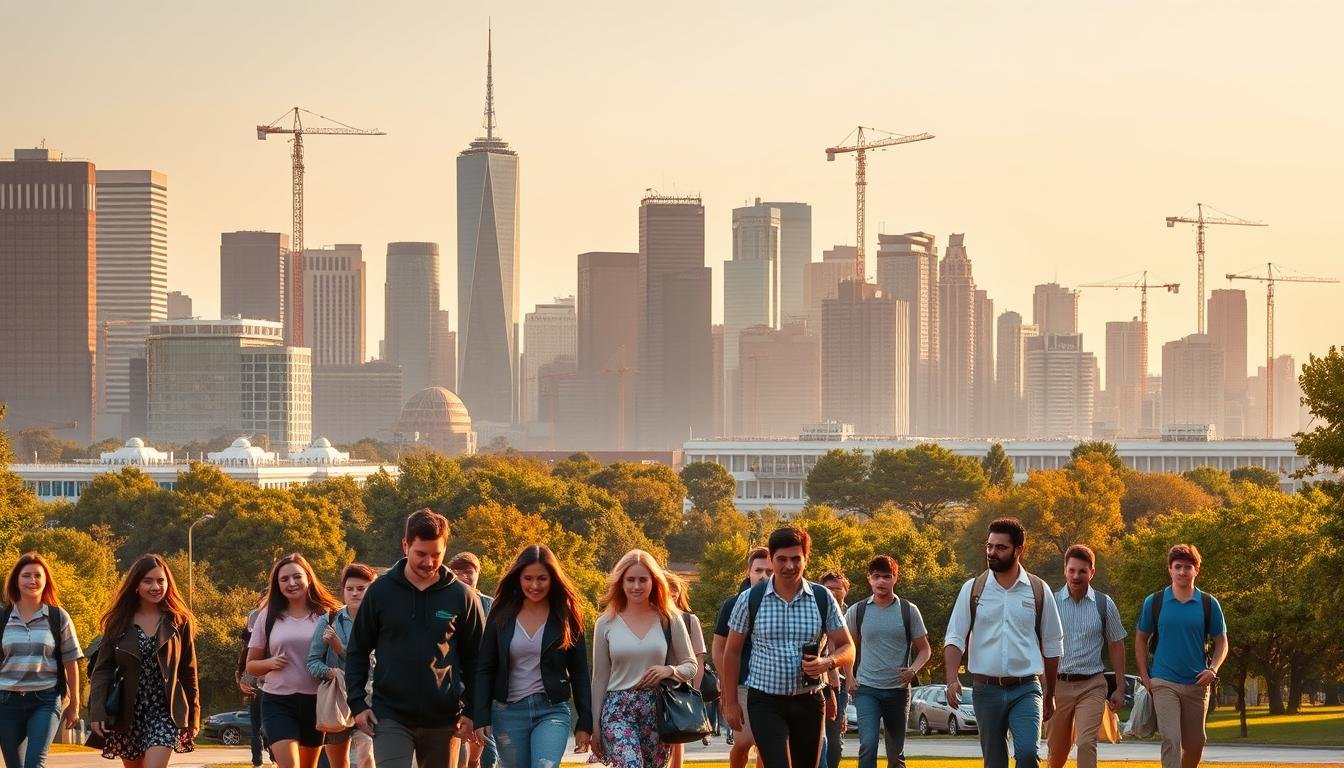
The United States is a premier destination for International Student Opportunity, offering world-class education and diverse cultural experiences. With a growing US education market, understanding this opportunity is crucial for educational institutions and businesses alike.

The higher education sector is experiencing significant growth, driven by the increasing demand from International Student Opportunity. This article explores the current landscape and growth projections in the international student market.
Key Takeaways
- The US is a top destination for International Student Opportunity seeking higher education.
- The international student market is projected to continue growing.
- Educational institutions and businesses can capitalize on this opportunity.
- Understanding the US education market is crucial for success.
- The higher education sector is a significant contributor to the US economy.
The Current Landscape of International Education in the USA
The landscape of international education in the United States is characterized by a robust presence of global students. This phenomenon is not just about numbers; it’s about the diverse perspectives, cultural exchange, and academic excellence that International Student Opportunity bring to American campuses.
Key Statistics and Market Size
The international education market in the USA is substantial, with over 1 million International Student Opportunity enrolled in various programs. According to the Open Doors Report by the Institute of International Education, International Student Opportunity contributed $44.7 billion to the US economy in the 2020-21 academic year. This significant economic impact underscores the importance of international education.
| Year | Number of International Student Opportunity | Economic Contribution |
|---|---|---|
| 2019-20 | 1,075,496 | $41.9 billion |
| 2020-21 | 914,095 | $44.7 billion |
Leading Destination Universities and Colleges
Top universities in the USA attract a significant number of International Student Opportunity. Institutions like Harvard University, New York University (NYU), and the University of Southern California (USC) are among the favorites. These universities offer a wide range of programs and have strong support systems for International Student Opportunity.
Economic Contribution of International Student Opportunity
International Student Opportunity contribute to the US economy in various ways, including tuition fees, living expenses, and other expenditures. As noted by a report, “International students are not just a source of revenue; they are also a key part of the academic and cultural fabric of American institutions.” Their spending supports local businesses and creates jobs, thereby having a multiplier effect on the economy.
“The economic contributions of International Student Opportunity are multifaceted, extending beyond tuition fees to include living expenses and other personal expenditures.”
In conclusion, the current landscape of international education in the USA is marked by a significant presence of international students, contributing to both the economy and the cultural diversity of American campuses.
Understanding The $50 Billion International Student Opportunity Market USA2025
With a projected value of $50 billion by 2025, the international student market in the USA presents a substantial opportunity. This growth is driven by a combination of factors, including demographic changes, economic conditions, and technological advancements.
Growth Projections and Market Trends
The International Student Opportunity market in the USA is expected to continue its upward trajectory, driven by increasing demand for quality education. Growth trends indicate a steady rise in enrollments, with certain segments, such as graduate and online programs, showing particularly strong potential. According to recent market projections, the sector is likely to experience a compound annual growth rate (CAGR) of 5-7% through 2025.
Key trends shaping the market include the increasing popularity of STEM fields (Science, Technology, Engineering, and Mathematics), a growing preference for universities with strong research output, and a rising demand for flexible, online, and hybrid learning options.
Factors Driving Market Expansion
Several factors are driving the expansion of the International Student Opportunity. These include:
- Increasing global demand for higher education
- Competitive tuition fees compared to other developed countries
- The global reputation of US universities
- Opportunities for post-study work visas
Post-Pandemic Recovery and New Opportunities
The COVID-19 pandemic has presented both challenges and opportunities for the International Student Opportunity. While there were initial disruptions, the sector has shown resilience, with institutions adapting to new student needs and preferences. The post-pandemic recovery phase is characterized by a renewed focus on internationalization, innovative delivery models, and enhanced support services for International Student Opportunity.
As the market continues to evolve, there are new opportunities emerging, particularly in areas such as educational technology, student housing, and financial services tailored to international students.
Top Source Countries and Their Contribution
Asia remains the largest contributor to the International Student Opportunity population in the United States. The region’s strong education systems, cultural ties, and economic factors have made it a significant source of International Student Opportunity – read more.
Asian Markets: China, India, and South Korea
The majority of International Student Opportunity come from Asian countries, with China, India, and South Korea leading the way. These countries have established strong educational pipelines to US institutions.
Student Demographics and Preferences
Students from these Asian markets tend to prefer STEM fields (Science, Technology, Engineering, and Mathematics), driven by career opportunities and parental influence. Understanding these demographics is crucial for targeted recruitment.
Field of Study Trends
The most popular fields of study among Asian students include engineering, computer science, and business. Institutions can tailor their programs to meet the demand in these areas, enhancing their appeal to International Student Opportunity.
Emerging Source Regions: Middle East, Africa, and Latin America
Beyond Asia, emerging source regions such as the Middle East, Africa, and Latin America are gaining prominence. These regions present new opportunities for US institutions looking to diversify their International Student Opportunity populations.
Institutions can capitalize on these emerging markets by developing region-specific programs and partnerships, thereby expanding their global reach.
Economic Impact of International Student Opportunity Economy
The presence of International Student Opportunity in the US has a profound economic impact, extending beyond tuition fees to various sectors of the economy. Their contributions are multifaceted, influencing the economy in both direct and indirect ways.

Direct Spending on Tuition and Living Expenses
International Student Opportunity contribute significantly to the US economy through their direct spending on tuition fees and living expenses. According to various studies, this spending amounts to billions of dollars annually. For instance, tuition fees for International Student Opportunity can range widely depending on the institution and program, while living expenses include accommodation, food, and other personal expenditures. This direct spending supports local businesses and contributes to the overall economic activity.
Indirect Economic Benefits and Job Creation
Beyond direct spending, International Student Opportunity also generate indirect economic benefits. Their presence supports job creation in various sectors, including education, hospitality, and retail. Universities and colleges employ staff to support international students, from admissions officers to counselors. Moreover, the spending by international students on housing, food, and other living expenses stimulates local economies, creating jobs and fostering economic growth.
Long-term Economic Contributions of International Alumni
The economic contributions of International Student Opportunity extend far beyond their period of study. Many international alumni remain in the US, contributing to the economy as professionals, entrepreneurs, and innovators. They bring with them the knowledge, skills, and global perspectives acquired during their studies, often leading to the creation of new businesses, jobs, and economic opportunities. This long-term impact is a significant aspect of the overall economic benefit that International Student Opportunity bring to the US.
In conclusion, the economic impact of international students on the US economy is substantial and multifaceted. Through direct spending, indirect economic benefits, and long-term contributions, international students play a vital role in shaping the US economy.
Challenges in Attracting and Retaining International Students
As the global education landscape evolves, the US faces challenges in maintaining its appeal to international students. The country’s ability to attract and retain these students is influenced by several factors.
Visa Policies and Immigration Hurdles
Complex visa policies and immigration hurdles pose significant challenges. The process of obtaining a student visa can be lengthy and uncertain, deterring potential students.
Competition from Other Education Destinations
The US is not the only destination for international students; countries like the UK, Australia, and Canada are also vying for the same talent pool. This competition necessitates innovative strategies to maintain the US’s attractiveness.
Cultural Adaptation and Support Systems
Cultural adaptation is crucial for international students’ success. Universities must provide robust support systems, including language assistance, cultural orientation, and mental health services, to help students adjust.
| Challenge | Impact | Potential Solution |
|---|---|---|
| Visa Policies | Lengthy and uncertain process | Streamline visa application process |
| Competition | Loss of talent to other countries | Enhance marketing and recruitment strategies |
| Cultural Adaptation | Difficulty adjusting to new culture | Provide cultural orientation and support services |
Business Opportunities in the International Student Sector
The $50 billion International Student Opportunity in the USA is not just a market; it’s a gateway to numerous business ventures. As the number of international students continues to rise, entrepreneurs and businesses are presented with a wide range of opportunities to cater to their diverse needs.

Student Housing and Accommodation Services
One of the significant challenges international students face is finding suitable accommodation. This has led to a surge in demand for student housing and accommodation services. Businesses offering tailored housing solutions, such as homestays, dormitories, and apartment rentals, are well-positioned to capitalize on this trend. Providing safe, affordable, and convenient housing options can be a lucrative business opportunity.
Educational Technology and Support Services
The integration of technology in education has become increasingly important, especially for international students who may require additional support. Businesses that offer educational technology solutions, such as language learning apps, online tutoring services, and study abroad consulting, are meeting the evolving needs of this demographic. These services not only enhance the learning experience but also provide valuable support to international students navigating the US education system.
Financial Services and International Banking
International students often require financial services tailored to their needs, including banking solutions that facilitate transactions across borders. International banking services that offer easy-to-use accounts, minimal fees, and accessible customer support are in high demand. Additionally, businesses that provide financial counseling and assistance with tuition payments can help alleviate some of the financial stress faced by international students.
Cultural Integration and Student Experience Businesses
Cultural integration is a crucial aspect of the international student experience. Businesses that offer cultural integration programs, such as cultural orientation, language exchange events, and social activities, help international students adjust to their new environment. By enhancing the overall student experience, these businesses can play a significant role in ensuring the well-being and success of international students in the US.
Institutional Strategies for Capturing Market Share
As the international student market continues to grow, educational institutions are adopting innovative strategies to capture a larger market share. The key to success lies in understanding the diverse needs of international students and tailoring institutional approaches accordingly.
Digital Recruitment and Virtual Campus Tours
Digital recruitment has become a cornerstone of institutional strategies, enabling universities to reach a global audience. Virtual campus tours offer prospective students an immersive experience, allowing them to explore facilities and get a feel for campus life remotely. This not only enhances the applicant experience but also streamlines the recruitment process.
International Partnerships and Pathway Programs
Forming international partnerships and offering pathway programs are effective strategies for institutions to attract and retain international students. These collaborations facilitate student mobility by providing clear educational pathways. For instance, partnerships between US institutions and international schools can create articulation agreements, making it easier for students to transition.
| Partnership Type | Benefits | Examples |
|---|---|---|
| Articulation Agreements | Streamlined credit transfer | University of California partnerships with international institutions |
| Dual Degree Programs | Enhanced educational experience | New York University’s dual degree programs with international universities |
| Joint Research Initiatives | Increased research opportunities | MIT’s collaborative research projects with international partners |
Support Systems and Student Success Initiatives
To ensure the success of international students, institutions are implementing comprehensive support systems. These include academic support services, cultural adaptation programs, and career counseling tailored to the needs of international students. By fostering a supportive environment, institutions can enhance student satisfaction and retention rates.
Key support initiatives include:
- Language support services
- Cultural orientation programs
- Mentorship programs
By adopting these institutional strategies, educational institutions can effectively capture a larger share of the international student market, enhancing their global reputation and contributing to a diverse campus environment.
Policy Implications and Government Initiatives
The US government plays a crucial role in shaping the international education landscape through various policies and initiatives. As the international student market continues to evolve, understanding these policy implications is essential for educational institutions and stakeholders.
Federal Policies Affecting International Education
Federal policies have a significant impact on international education. Recent changes in visa policies and regulations have affected the flow of international students. Policies aimed at enhancing national security while facilitating the entry of genuine students are crucial. The International Student Program is a key initiative that monitors and manages international students during their stay in the USA.
State-Level Initiatives and Regional Approaches
State governments are also actively involved in promoting international education. State-level initiatives often focus on attracting international students through scholarships, marketing campaigns, and partnerships with foreign educational institutions. Regional approaches help tailor programs to specific international markets, enhancing the USA’s competitiveness.
Public-Private Partnerships in International Education
Public-private partnerships are increasingly important in international education. These collaborations between educational institutions, businesses, and government agencies foster innovation and support the growth of international student enrollment. Partnerships can lead to new programs, such as joint degrees and research initiatives, benefiting both domestic and international students.
In conclusion, the interplay of federal policies, state-level initiatives, and public-private partnerships shapes the landscape of international education in the USA. Understanding these elements is crucial for institutions seeking to attract and retain international students in an increasingly competitive global market.
Conclusion: Preparing for the Future of International Education
As the international student market continues to evolve, understanding the current landscape and growth projections is essential for stakeholders. The USA remains a premier destination for international students, with a $50 billion market that is expected to grow further.
To capitalize on this opportunity, educational institutions, businesses, and policymakers must work together to address challenges and harness the full potential of this market. By staying informed about market trends and adapting to changing circumstances, stakeholders can ensure the long-term success of international education in the USA.
The future of international education will be shaped by factors such as technological advancements, shifting global demographics, and evolving student needs. By preparing for these changes and fostering a collaborative environment, the USA can continue to attract and retain top international talent, driving economic growth and cultural exchange.
Table of Contents
FAQ
What is the current size of the international student market in the USA?
The international student market in the USA is valued at $50 billion.
Which countries are the top sources of international students in the USA?
The majority of international students in the USA come from Asian countries, including China, India, and South Korea.
What are the main challenges faced by international students in the USA?
International students in the USA face challenges such as navigating complex visa policies and immigration hurdles, as well as adapting to a new cultural environment.
How do international students contribute to the US economy?
International students contribute to the US economy through direct spending on tuition and living expenses, as well as indirect economic benefits such as job creation.
What business opportunities are available in the international student sector?
Business opportunities in the international student sector include student housing and accommodation services, educational technology and support services, and financial services and international banking.
How are educational institutions adapting to the changing needs of international students?
Educational institutions are adopting strategies such as digital recruitment and virtual campus tours, international partnerships and pathway programs, and support systems and student success initiatives to attract and retain international students.
What role do government policies play in shaping the international education landscape?
Government policies, including federal policies affecting international education and state-level initiatives, play a crucial role in shaping the international education landscape and impacting the attractiveness of the USA as a study destination.
Source link
- https://www.statista.com/statistics/237681/international-students-in-the-us/
- https://www.nafsa.org/about/about-nafsa/international-students-contribute-record-breaking-level-spending-and-378000-jobs
- https://www.nafsa.org/policy-and-advocacy/policy-resources/nafsa-international-student-economic-value-tool-v2
- https://www.washingtonpost.com/education/2025/05/28/international-students-economic-impact-trump-harvard/